
Mega Man X: The SNES 16-Bit Revolution That Marked a Generation of Gamers
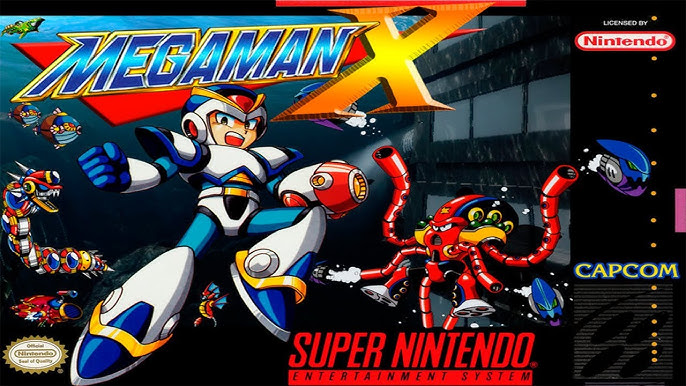
The first stage of Mega Man X contains the best game design lesson ever made in 16 bits — and it lasts eight minutes. You start out without knowing how to dash, get badly beaten by Vile in a fight scripted to be unwinnable, get rescued by Zero, and leave the stage with the feeling that you've just stepped into a bigger, more serious universe than any classic Mega Man ever promised. In 1993, Capcom didn't just refresh a franchise — it showed an entire industry how to make an ambitious sequel without betraying its roots.
The Birth of an Icon at the End of the 16-Bit Era
Released in December 1993 for the Super Nintendo, Mega Man X arrived at a moment when the classic Rockman series was already showing signs of fatigue: six NES games with a similar formula, and an audience starting to ask for more. Rather than abandon the little blue guy, Capcom decided to age him up — literally.
The story jumps 100 years into the future. Dr Light is dead, but he left behind one final project: X, an android capable of doubting himself, questioning orders and choosing his own path. A simple idea that changed everything about the series' tone. From the colourful, cartoonish universe of the NES, we jump to a world of conflict between humans and Reploids, Mavericks, Sigma, and moral dilemmas the franchise's earlier, more child-friendly games never touched.
Dash, Wall-Jump, and Gameplay That Redesigned the Genre
Mega Man X's big mechanical innovation was twofold: the Dash (a quick ground burst of speed) and the ability to cling to and jump between walls. It sounds trivial today, but in 1993 those two mechanics turned every static 2D platforming stage into a vertical playground, full of shortcuts, alternate routes and rewards for players who explored.
Add to that the natural progression of weaponry — a fully charged X-Buster, armour pieces hidden throughout the stages (helmet, chest, legs, arm), health tanks — and you've got one of the most complete and replayable games on the SNES. Boss order became genuine strategy: killing the wrong one first could make a later stage absurdly easier.
Eight Mavericks, Eight Eternal Memories
The Maverick bosses, each inspired by an animal, went down in genre history:
- Chill Penguin — the famous "first on the list" every veteran recommends, because his weapon freezes Flame Mammoth and unlocks the leg armour early
- Storm Eagle — a stage that rolls across an aircraft carrier with wind altering your jump physics, a pure 16-bit audiovisual showcase
- Spark Mandrill — whose stage turns into a nightmare if you arrive without the right weapon, with power failing and the lights going out
- Flame Mammoth — the final platforming push, an epic arena, perfect for wrapping up the first round of Mavericks
- Armored Armadillo, Launch Octopus, Boomer Kuwanger, Sting Chameleon — each with its own gimmick and an unforgettable track
Figuring out the ideal order and watching stages change in real time — beating Chill Penguin freezes over Flame Mammoth's stage, taking down Storm Eagle kills the lights in Spark Mandrill's — was exactly the kind of thing that had kids swapping tips at recess.
A Soundtrack That Crossed Three Decades
The soundtrack, composed by Setsuo Yamamoto, Makoto Tomozawa, Yuki Iwai, Yuko Takehara and Toshihiko Horiyama, is still revered today as one of the best of the 16-bit era. The Spark Mandrill theme entered pop culture, has been remixed countless times, guitar covers still circulate on YouTube, and the Storm Eagle theme remains workout music for anyone who loves retro.
The opening stage, with that urgent, heavy riff, primes the player for the seriousness of what's coming without needing a single line of dialogue.
The Legacy That Never Faded
Mega Man X sold well over a million copies in the US alone, spawned eight numbered sequels, spin-offs like Mega Man X Command Mission, collections across every subsequent generation, and was rereleased on practically every modern console via the Mega Man X Legacy Collection. Its influence shows up in contemporary 2D platformers from Shovel Knight to Hollow Knight, any time a game builds around vertical exploration and ability-based progression.
If you've never played it, the Legacy Collection on Switch, PlayStation, Xbox or Steam is the direct route in — and the experience is still just as sharp as it was in 1993. If you have played it, you already know what happens: three decades later, stage 1 is still a masterclass and that title-screen riff still gives you chills. Which Maverick did you always save for last? Tell us in the comments.
Read next

Match Day – Futebol Brasileiro 96
Corinthians vs Palmeiras on the SNES in 1996: why Tectoy's Futebol Brasileiro 96 still gets a sigh out of anyone who …
Mega Man X (SNES): the all-items password and how to get the Hadouken
The 12-digit Mega Man X password that unlocks everything, and why no password in the world can save the Hadouken — …

Futebol Brasileiro 96 for Super Nintendo: The Complete Production History and Legacy
The story of the cartridge Tectoy made just for Brazil: how Futebol Brasileiro 96 became a rarity, a collectible and a …
Comments