
The Legend of Zelda: Breath of the Wild – Exploring the Secrets of Hyrule
There's a video with well over a million views showing a player defeating a dragon using nothing but a metal tray, some paraffin and an electrical storm. No scripted event guided that moment — it was pure in-game physics, behaving like real physics. Nine years after launch, The Legend of Zelda: Breath of the Wild is still cited as the benchmark by which open worlds are measured.
The Launch That Changed Everything in March 2017
Breath of the Wild launched on 3 March 2017 alongside the Nintendo Switch itself — and, simultaneously, on the dying Wii U, both a farewell and an invitation. Directed by Hidemaro Fujibayashi and produced by Eiji Aonuma, the game swept Game of the Year awards that year and had sold more than 30 million copies by 2023.
Radical Freedom From the First Minute
Once you leave the Great Plateau — the tutorial area — the game simply stops guiding you. With the four basic Sheikah Slate abilities (Remote Bomb, Magnesis, Stasis and Cryonis), you can, technically, run straight to the castle and face Ganon on day one. That broke Nintendo's own tradition of linear structure in Zelda games, and it was one of the reasons the game felt so shocking back in 2017.
The Chemistry That Makes the World Feel Alive
The real secret behind that dragon video is what Nintendo called the "Chemistry Engine": wood reacts with fire, metal attracts lightning, wind fans flames, water cools heat and vice versa. None of it is explained in a tutorial — you discover it by playing, experimenting, accidentally setting a field of grass on fire and learning from the result.
The 120 Shrines and the Logic of the "Aha!" Moment
The 120 Shrines scattered across Hyrule work like practical mini-lessons — each one teaches (or tests) a single principle of physics, chemistry or combat in isolation, no filler attached. Every four completed Shrines, you can trade their Blessings for an extra heart container or stamina vessel, letting you shape your own playstyle from early on.
The Legacy: Tears of the Kingdom and Beyond
The direct sequel, Tears of the Kingdom, arrived in May 2023, reusing and expanding the same map of Hyrule while adding mechanics like Ultrahand and Fuse. Beyond the franchise itself, the impact was even bigger: studios like Ubisoft, From Software and Rockstar have publicly credited Breath of the Wild's influence on their own projects, and comparisons to Elden Ring's design have become almost obligatory in any discussion of open-world design over the past decade. It's not an exaggeration to say that much of the creative nerve behind Baldur's Gate 3 — another game that rewrote the rules of its own genre — traces back to the same question Breath of the Wild asked in 2017: what if the player could solve everything however they wanted?
Where to Start Today
If you've never played either one and aren't sure where to begin, the recommendation is to start with Breath of the Wild, even knowing that Tears of the Kingdom is technically superior in almost every respect. The reason is simple: BotW is the purest version of the formula, without the extra weight of systems the sequel piled on top. It's the experience of discovery in its rawest form.
So, what was your first big "aha" moment in Hyrule? Was it a Shrine, a fight against a Guardian, or simply discovering you could roast an apple near a campfire? Tell us in the comments.
Read next
The Definitive Super Nintendo (SNES) Guide: Emulation, Games and Passwords
Everything you need to know about the Super Nintendo (SNES) in 2026. The best emulators, unforgettable games and how to …
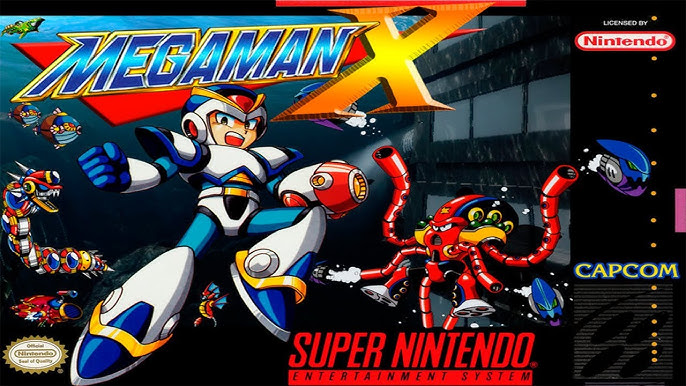
Mega Man X: The SNES 16-Bit Revolution That Marked a Generation of Gamers
Dash, wall-jump and an android in existential crisis: why 1993's Mega Man X is still a masterclass in 16-bit game design …

Match Day – Futebol Brasileiro 96
Corinthians vs Palmeiras on the SNES in 1996: why Tectoy's Futebol Brasileiro 96 still gets a sigh out of anyone who …
Comments