
Top Gear: Loved by Brazilians and Forgotten by the World
Ask any Brazilian who grew up with a Super Nintendo to name a racing game from that era, and there's a good chance the first word out of their mouth is "Top Gear." Ask the same question anywhere else in the world, and you're far more likely to get a blank stare. That gap between two receptions to the exact same cartridge is one of gaming history's strangest, most specifically Brazilian phenomena.
A Classic That Shouldn't Have Worked This Well
Top Gear was released in March 1992, developed by Gremlin Graphics and published by Kemco for the Super Famicom/Super Nintendo. On paper, it wasn't trying to reinvent anything: 16 tracks split across four continents, split-screen two-player mode, a simple fuel and pit-stop management system, and a pseudo-3D pushed to the very limit of what Mode 7 could handle. Nothing about that description screams "future national obsession" — and yet.
The Soundtrack Nobody Forgets
Composer Barry Leitch wrote a soundtrack that, on its own, would be enough to justify the game's cult status. "Track 1," the theme that plays over the very first race, became such an earworm that entire generations can still hum it decades later without having touched a Super Nintendo in years. Leitch went on to score other racing games afterwards — Lotus Turbo Challenge among them — and his influence is still audible in music for later racers, including the openly nostalgic soundtrack style of games like Horizon Chase and even parts of F-Zero X. Few 16-bit soundtracks earned that kind of staying power in players' memory.
Why Brazil Embraced It Like No Other Country
Here's where the story turns specifically Brazilian. The Super Nintendo only launched officially in Brazil in 1993, through Playtronic, at prices far above what most families could justify for a toy. That scarcity changed everything about how games got consumed here: rental shops (the "locadoras de fita e videogame") became the primary way an entire generation actually played console games, since owning a cartridge collection was out of reach for most households. Pirated cartridges and grey-market imports filled in more of the gap.
Top Gear thrived precisely inside that context. It was cheap and widely pirated, easy to find at any rental counter, simple enough that a eight-year-old could understand it in thirty seconds, and — crucially — built for two players sharing one screen. In a country where consoles were shared property between siblings, cousins and neighbours rather than a personal device, that combination of accessibility and split-screen multiplayer was a far bigger deal than raw technical sophistication.
Split Screen and Broken Friendships
Anyone who played Top Gear competitively remembers exactly the same thing: the shoulder-barge. Ramming the opponent's car off the track at the right moment, right before a corner, was less a bug than an unofficial rule everyone agreed to exploit. Brazilians ended up nicknaming the whole experience "futebol de botão com motor" — table football with an engine — because matches turned into contact sport as much as racing. Friendships were tested. Controllers were thrown. Nobody regretted a minute of it.
Forgotten Globally, Eternal at Home
Internationally, Top Gear got respectful but unremarkable reviews at launch and was largely eclipsed by flashier racers in the years that followed — including its own sequel, Top Gear 3000, which pushed the format further but never quite recaptured the same specific magic for Brazilian players. Ask a gaming historian in the UK or the US about Top Gear today, and you'll likely get a footnote. Ask someone in Brazil, and you'll get a monologue.
That gap is exactly why modern homages like Horizon Chase Turbo — made by a Brazilian studio, Aquiris — lean so openly on Top Gear's DNA: the arcade handling, the continent-hopping tour structure, the unapologetically upbeat soundtrack. It's not coincidence; it's a generation paying tribute to the game that soundtracked their childhood living rooms.
So, be honest: how many controllers did your household sacrifice to a Top Gear shoulder-barge gone wrong? Tell us in the comments.
Read next
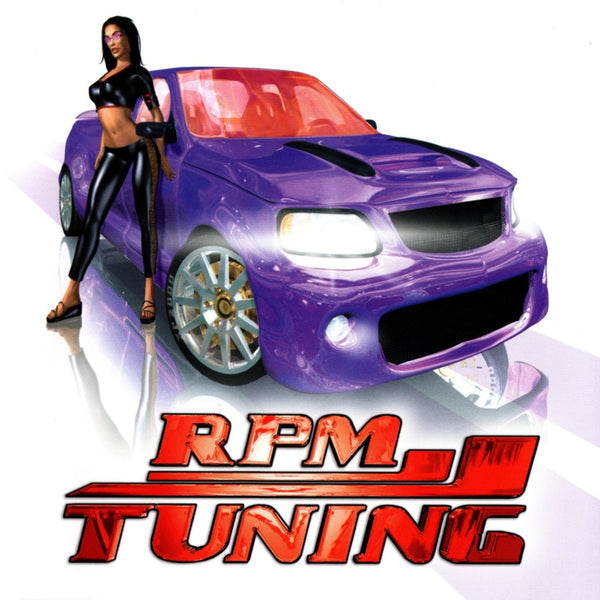
RPM Tuning: The Controversial "Last Top Gear" of the 128-bit Era You Almost Forgot
RPM Tuning tried to resurrect the Top Gear franchise on PS2 in 2004 — and split Brazilian fans between nostalgia and …
Top Gear (SNES): every password for all 8 tracks and 3 difficulties
A verified list of Top Gear SNES passwords: all 8 tracks across Amateur, Pro and Champion difficulty, with the spaces in …
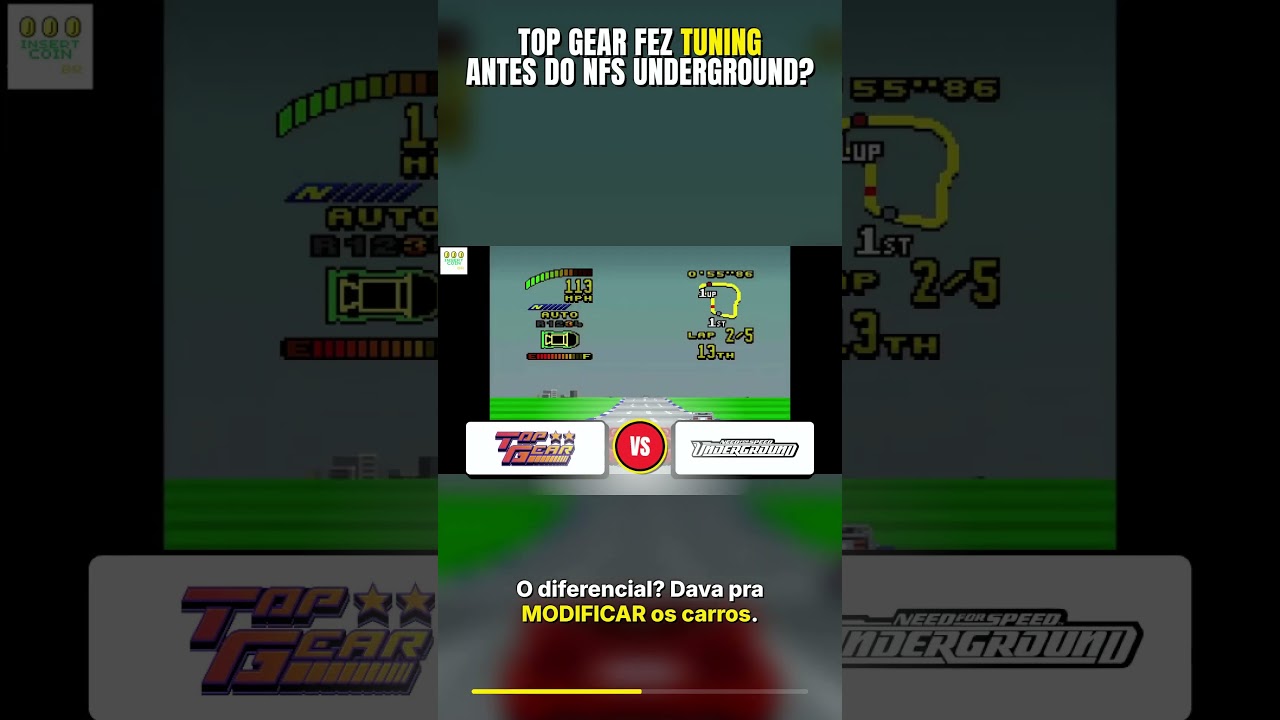
Did Top Gear do car tuning before NFS Underground? Yes — in 1993
Ten years before NFS Underground turned tuning into culture, Top Gear 2 was already selling engines, gearboxes and nitro …
Comments