
Did Top Gear do car tuning before NFS Underground? Yes — in 1993
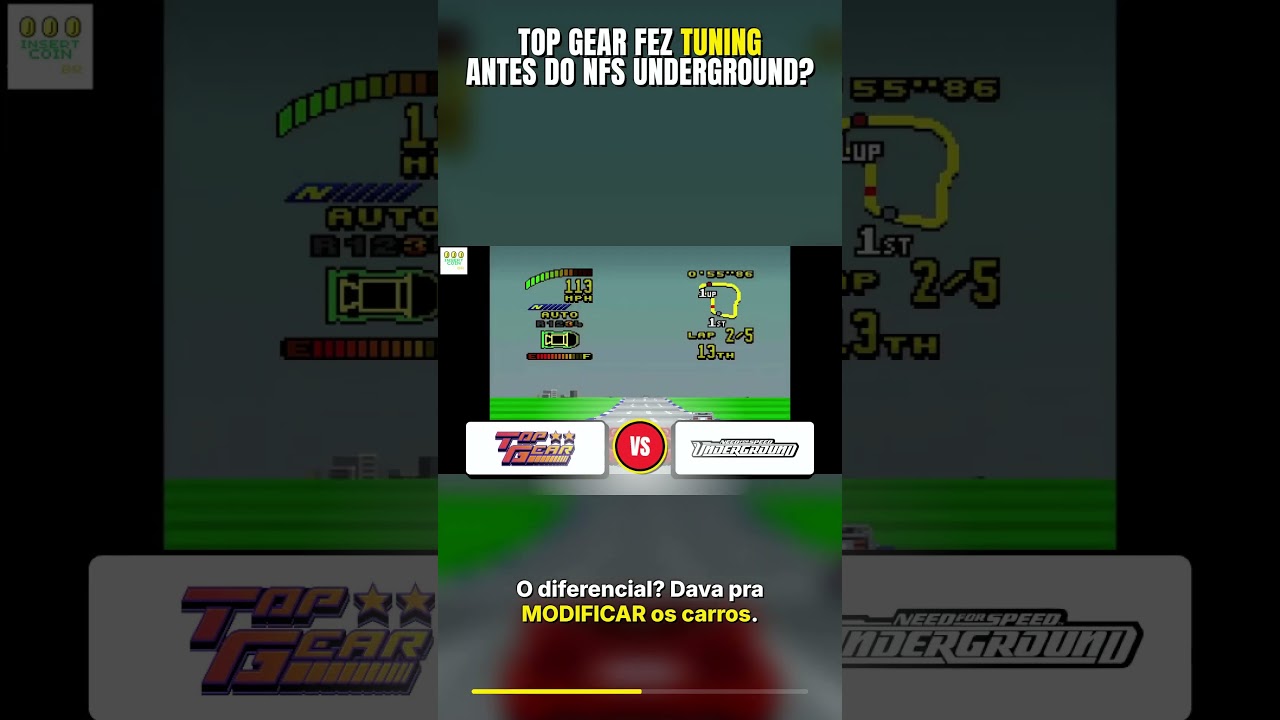
A question for the gamer bar table: when did tuning arrive in racing games? Almost everyone's automatic answer is 2003 — Need for Speed Underground, purple neon, an absurd rear wing and Get Low playing in the internet cafe. But anyone who grew up with a Super Nintendo hooked up to a CRT knows the penny dropped much earlier: Top Gear 2, in 1993, already let you buy an engine, a gearbox, tyres and nitro between races. Ten years before Underground existed.
That's the provocation the channel's new video throws on the table: how much of that car-tuning fever that defined the 2000s was already there, in 16-bit form, in the cartridge everyone played?
What Top Gear 2 was already doing in 1993
The first Top Gear, from 1992, was pure racing: pick the car, memorize the track, finger on the accelerator and heart in your mouth. The sequel changed the game — literally. Between races, Top Gear 2 opened an upgrade shop: a three-level engine, gearbox, tyres for every weather condition, armor and the precious nitro. Won prize money, invested it in the car; crashed too much, paid for the repairs.
That's the backbone of what we call tuning in a racing game: mechanical progression bought with money from the track. There were no flame decals or purple vinyls — the cosmetic side came down to a handful of body colors — but the "your car evolves with you" logic was entirely there, running at 60 frames on the same console you had when you were ten.
What NFS Underground actually invented
None of that takes anything away from Underground — it just didn't invent what it usually gets credited for. The 2003 revolution was cultural: turning the car into an identity. Body kits, underglow neon, a giant sound system in the boot, the whole Fast & Furious aesthetic inside the game — and the hunt for the crew bosses we relived in the Honda Civic challenge and in the marathon of beating the first boss with no upgrades.
In other words: Top Gear 2 tuned the machine, Underground tuned the owner. They're two halves of the same story, separated by a decade and by swapping the cartridge for a DVD.
And the franchise? It went on to tune a bit too much
The tasty detail is that the Top Gear series itself ended up embracing the aesthetic Underground made famous: RPM Tuning, the controversial "last Top Gear" of the 128-bit era, came out in 2004 chasing exactly that wave — neon, wet streets and a night-tuning look. The student became the teacher's reference point, and the result still divides fans today.
Along the way there was also Top Gear 3000 and its intergalactic races, which took the upgrade shop into space — proof that the series treated car progression as part of its DNA long before that had a subgenre name.
Watch it here
The video revisits that lineage with the footage side by side — and seeing the 1993 upgrade menu on screen again hits differently. Hit play:
So, which side are you on: old-school tuning buying an engine in the SNES blue menu, or the neon of Underground? Tell us in the video comments — and subscribe to Insert Coin Brasil, where steering-wheel nostalgia is an ongoing series.
Read next
Top Gear (SNES): every password for all 8 tracks and 3 difficulties
A verified list of Top Gear SNES passwords: all 8 tracks across Amateur, Pro and Champion difficulty, with the spaces in …

NFSU: I beat the boss with zero upgrades — and this was the first part I bought
After beating the first Need for Speed Underground boss with a 100% stock Civic, it was time to open the garage. Which …

NFSU: can you beat the first boss with zero upgrades?
Zero upgrades, zero tuning. I took on the first boss in Need for Speed Underground with a 100% stock Civic to see if you …
Comments